

Blood Clot Risk in the Transgender Community: A Message from Our Patient Advocates
This Pride Month, NATF is proud to update our readers about an initiative that we featured in this newsletter one year ago: Assessing and Addressing the Risk of Blood Clots Across the Spectrum of Gender-Affirming Care. Clinicians, researchers, and transgender patients from across the country came together to develop guidance on managing blood clot risk in transgender individuals, and their recommendations were published in the medical journal Endocrine Practice earlier this year.
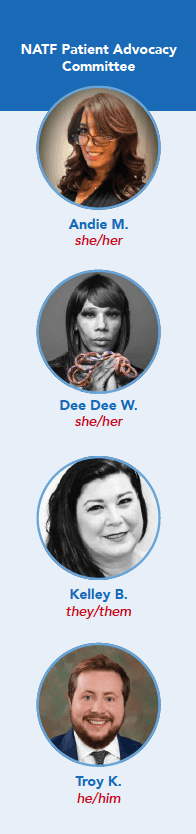
As a key part of this initiative, NATF also established a patient advocacy committee to help raise awareness about blood clot risk in the transgender community. Our dedicated committee members, Andie, Dee Dee, Kelley, and Troy, are part of the transgender community and are excited to unveil the patient education campaign that they’ve spent the last year working on.
“Our committee is dedicated to improving the health and wellness of the transgender community by increasing awareness about the potential risk of blood clots along the gender-affirmation journey.
We have developed some simple resources about blood clot risk to inform and empower those in our community. As an advocacy group, we value everyone’s unique experiences and are committed to helping our community move forward in their journeys without fear and through the exchange of positive facts and information. At the end of the day, we all matter, and no one is alone!”
Originally published in The Beat — June 2023. Read the full newsletter here.
Keep reading
 Blood Clots
I’ve been prescribed a blood thinner – now what?
An anticoagulant (often called a “blood thinner”) is a medication that’s used to treat and prevent blood clots.
Read Blood Clots
Anticoagulant Comparison Chart
Your healthcare provider may prescribe an anticoagulant (sometimes called a blood thinner) after you have a blood clot.
Read Blood Clots
Does Flying Increase My Risk for a Clot?
Long-distance travel may raise your stress level, but can it also raise your risk of getting a blood clot?
Read