

Heart Failure’s Quiet Companion: The Risk of Blood Clots
Heart failure (HF) is a serious condition that affects millions of people worldwide and is becoming more common as the population ages. Most people know that it causes fatigue, swelling, and shortness of breath. Few realize that the condition also increases the risk of blood clots.
Raising awareness about this connection is one step forward in improving outcomes for those living with heart failure.
What Is Heart Failure?
HF occurs when the heart has trouble pumping properly. The walls of the heart might be stiff or damaged, or the heart muscle might not pump as strongly as it should. These problems can raise pressure in the heart or reduce its ability to circulate enough blood to support the body, whether at rest or during activity.
HF can affect different parts of the heart, resulting in:
| Heart Failure Type | Normal Function | What Happens When It Fails? | Defining Features |
|---|---|---|---|
| Left-Sided HF | Pumps oxygen-rich blood to the body | Fluid builds up in the lungs, making breathing difficult | Systolic HF (trouble pumping blood out), Diastolic HF (stiff heart chamber) |
| Right-Sided HF | Sends blood to the lungs to pick up oxygen | Blood backs up in veins, causing swelling in legs, ankles, or belly | Often caused by left-sided HF or lung disease |
Understanding Blood Clots
As part of the body’s natural healing process, blood clots form when a blood vessel has become damaged. Platelets and proteins in the blood work together to create a clot that stops bleeding and protects the injured area. Sometimes, clots can form inside blood vessels even when there’s no clear injury, or they may not break down as they should, leading to serious health risks.
Why Does Heart Failure Increase Blood Clot Risk?
HF raises the risk of blood clots in several ways, including slowing blood flow and damaging blood vessels. These changes create conditions where dangerous clots, like deep vein thrombosis (DVT) or pulmonary embolism (PE), are more likely to form.
Damage to blood vessel walls
Heart failure can damage the walls of blood vessels, leading to endothelial dysfunction, a condition where the vessel lining loses its ability to work properly. Increased pressure in the vessels, abnormal blood flow, and oxidative stress—an imbalance of harmful molecules that damages the vessel lining—are key contributors. Over time, this damage weakens the vessels’ ability to relax and regulate blood flow.
Changes in the blood
Inflammation in HF raises levels of clot-promoting molecules like fibrinogen. It also activates platelets, making them stickier and more likely to form clots. Oxidative stress disrupts the blood’s natural balance between clotting and anti-clotting factors. Medications used to reduce fluid buildup in HF can increase blood concentration and further promote clot formation.
Altered blood flow
When HF reduces the heart’s pumping ability, it can lead to low cardiac output, where less blood is pumped out than normal. Over time, the heart’s chambers may stretch and enlarge, further weakening its function. This slower blood flow increases the risk of blood clots.
Atrial fibrillation (Afib), a common condition in people with HF, can further disrupt blood flow. In Afib, the heart’s irregular rhythm causes blood to pool in the atria, the two chambers of the heart that receive blood and pump it into the ventricles. This pooling creates an environment where clots are more likely to form. These clots can travel to the brain, leading to a stroke.
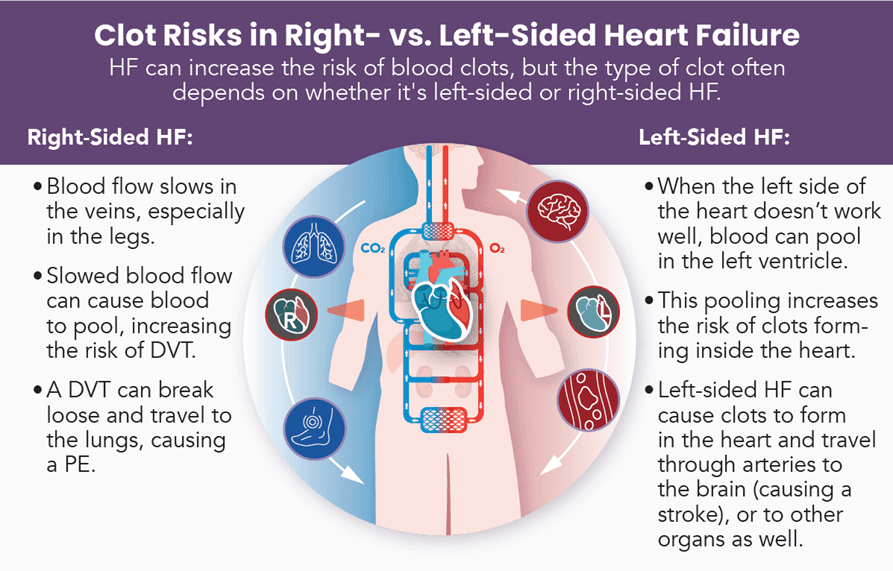
Read the clot-risk diagram+
Clot Risks in Right- vs. Left-Sided Heart Failure
HF can increase the risk of blood clots, but the type of clot often depends on whether it's left-sided or right-sided HF.
Right-Sided HF:
- Blood flow slows in the veins, especially in the legs.
- Slowed blood flow can cause blood to pool, increasing the risk of DVT.
- A DVT can break loose and travel to the lungs, causing a PE.
Left-Sided HF:
- When the left side of the heart doesn’t work well, blood can pool in the left ventricle.
- This pooling increases the risk of clots forming inside the heart.
- Left-sided HF can cause clots to form in the heart and travel through arteries to the brain (causing a stroke), or to other organs as well.
Diagram labels: CO₂, O₂.
Living Well with Heart Failure and Blood Clot Risks
Take your medications as prescribed and follow your clinician’s advice for managing other conditions that can make HF worse. Follow these tips to help manage HF and reduce your risk of blood clots:
- Manage stress: Use healthy coping methods like deep breathing, yoga, or joining a support group.
- Stay physically active: Regular movement improves heart health and prevents blood from pooling.
- Stop smoking: Smoking increases your heart rate and blood pressure and reduces your ability to stay physically active.
- Eat heart-healthy foods: Focus on fruits, vegetables, whole grains, lean proteins, and healthy fats. Limit processed foods, sugar, salt, and red meat.
- Get enough rest: Take breaks to reduce strain on your heart. Napping, putting your feet up, or sitting during tasks can prevent overexertion. For better sleep, avoid caffeine, alcohol, and heavy meals before bed.
HF can lead to blood clots, but understanding the connection can help you take control. Small, consistent steps—like following your care plan and addressing risk factors—can make a big difference in protecting your health.
Keep reading
 Heart Failure
Weight Loss Medications and Heart Disease Risk
Diabetes and obesity are two conditions that can raise the risk for both heart disease and blood clots. Now, a new class of medications called glucagon-like peptide-1 receptor agonists (aka GLP-1s ) has been getting a lot of...
Read Heart Failure
Hormones, Blood Clots, and Heart Health – What’s Menopause Got to Do With It
Menopause brings about many changes – some expected, others surprising. For women with a history of blood clots, heart disease, or other vascular risks, navigating this transition requires both knowledge and support.
Read Smoking & Vaping
Vaping and Your Blood Vessels: What the Research Actually Shows
Vaping is often discussed as a lung issue, but blood vessels are part of the story, too. Learn what researchers have found, what remains uncertain, and how to get support for quitting.
Read