Vasculearn Network
Blood Clots
What a blood clot is, where the dangerous ones form, and what to do about them. The conditions, complications, and questions worth knowing more about.
Thrombosis is the abnormal formation of a blood clot inside a blood vessel. Healthcare professionals may also call it a thrombus. Thrombosis prevents blood from flowing through the circulatory system. Without blood flow, tissues and essential organs, like the heart, can’t get enough nutrients.
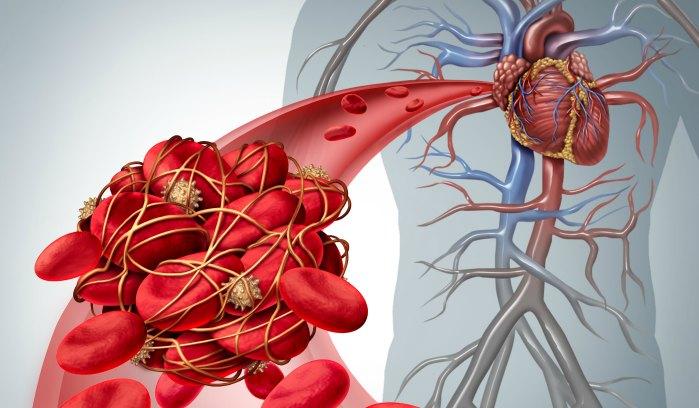
Blood clots that form and stay in place in the vein are called thrombi. When the blood clot detaches and travels through the bloodstream, it’s called an embolus. Thrombosis can develop in the arteries or the veins. Treatment will depend on the type, severity, and location of the clot within your body.
Symptoms
Blood clots in the veins can be dangerous or even life-threatening if left untreated. It’s important to know the signs and symptoms so you can seek medical care when necessary.
Some of these conditions are common in other conditions too, so it’s very important to see your doctor if you have any of these symptoms. Do not try to diagnose yourself!
Signs of a Deep Vein Thrombosis (“DVT”):
- Swelling of the legs, ankles, feet, arms, or forearms
- Pain, tenderness, itching, or warmth in the legs, thighs, or arms
- Changes in skin color, which can appear as a dusky bluish/purple color
Signs of a Pulmonary Embolism (“PE”):
- Shortness of breath
- Chest pain
- Cough or coughing up blood
- Fast heart rate
- Dizziness
What are Symptoms of a Blood Clot+
Blood clots can be dangerous or even life-threatening if left untreated. It’s important to know the signs, so that you can seek medical care when necessary. Please keep in mind that similar symptoms can also be caused by other conditions. It’s crucial to seek a professional medical opinion if you’re experiencing these symptoms, rather than trying to diagnose yourself on your own.
There are two major types of blood clots. A venous thromboembolism, or VTE, is a clot that forms in a vein, which is one of the low-pressure blood vessels that carry blood back to the heart, or in the blood vessels carrying blood from the heart towards the lungs. An arterial blood clot forms in an artery, which is one of the higher-pressure blood vessels that carry blood from the heart out to the tissues. Some examples of arterial blood clots include heart attacks and strokes.
In this article, we’ll focus on venous blood clots. There are two main types: deep venous thrombosis (DVT) and pulmonary embolism (PE). Both types have the potential to be dangerous if left untreated, so it’s important to know what to watch out for.
Signs and Symptoms of Deep Venous Thrombosis (DVT)
A deep venous thrombosis, or DVT, occurs in a vein. By far the most common site is in the leg, but they can also occur in the arm. (More rarely, a DVT can occur in the abdomen.) The symptoms will occur only on the affected side, while the opposite side remains normal. This is one of the major clues that the cause is likely to be a blood clot.
Some of the possible symptoms of a DVT in the leg or arm include:
- Pain in one area, which might feel like a muscle cramp. This is caused by the pressure of blood building up behind the clot.
- Swelling in the affected area, which is also a result of pressure building up.
- Redness, which is usually diffuse (spread out over the affected area). This is caused by inflammation, which is triggered by the clot.
- A feeling of warmth in the area, which is also a sign of inflammation.
It’s very common for the symptoms of a DVT to be dismissed as a pulled or torn muscle, or as having “slept funny” on the affected leg. This leads many patients to delay seeking medical care once their symptoms begin. Unfortunately, even many physicians make this mistake, particularly if the patient doesn’t have known risk factors for a clot.
You can try stretching the muscle that feels like it’s cramping (for example, bringing your toes upward towards your shin, if it’s your calf that hurts). This will make a muscle cramp feel better, while the pain of a clot will usually stay the same or get worse when you do this. However, if you suspect you may have a blood clot, don’t rely on this one test – seek medical attention.
The delay in diagnosis of DVT is dangerous. Left untreated, a DVT can progress to a much more dangerous and even life-threatening condition, known as a pulmonary embolism.
Signs and Symptoms of a Pulmonary Embolism (PE)
A pulmonary embolism, or PE, occurs when part of a blood clot breaks off and travels through the veins to the heart. From there, it makes its way into the blood vessels of the lungs, where it blocks blood flow through the arteries. This can lead to a variety of symptoms, including:
- Shortness of breath, which usually appears suddenly.
- Chest pain, which is often sharp and gets worse when you take a deep breath.
- Feeling lightheaded or fainting.
- Heart palpitations, or a heartbeat that’s fast and/or irregular.
- Cough. You may cough up some blood.
If you believe that you may have a DVT or PE, please seek immediate medical attention. The earlier a clot is diagnosed, the greater the likelihood that treatment will be able to avoid serious health complications. It’s better to seek medical care earlier, rather than waiting and risking long-term health problems.
Causes & Risk Factors
Types of thrombosis:
There are two main types of thrombosis.
- Arterial thrombosis: Refers to a blood clot that blocks an artery. Arteries carry blood away from the heart to other parts of the body. Arterial blood clots can block blood flow to the heart and brain. Blood clots in these areas can cause heart attacks or strokes.
- Venous thrombosis: Also known as venous thromboembolism or VTE, this type of clot happens in the vein. Veins carry blood from other parts of the body back to the heart. VTE is a condition that includes deep vein thrombosis (DVT) and pulmonary embolism (PE).
What Causes Thrombosis?
Blood clotting, or coagulation, is the body’s first line of defense against bleeding. Your body activates a clotting system when a blood vessel is injured, like from a cut. This clotting system forms a “plug” over the injury to prevent further bleeding. After the injury has healed, your body usually breaks down the clot. But sometimes, the clot fails to break down.
Blood clots can also form for reasons other than blood vessel injury. Certain health conditions, medications, or other medical treatments can cause blood to become too thick, increasing the chances of clotting. If blood flow is too slow because of lack of movement, blood can pool or rest in place. Blood that sits in one place for too long, tends to clot.
Thrombosis Risk Factors
Some people are more likely to develop thrombosis. Risk factors that can increase the chances of thrombosis include
- Surgery
- Obesity
- Smoking
- Diabetes
- Infections
- Pregnancy
- Major trauma
- Atrial fibrillation
- Family history of clots
- Limited physical activity
- Cancer and chemotherapy
- Inflammatory or autoimmune disease
- Genetic or acquired clotting disorders
- Plaque build-up in arteries or atherosclerosis
- Estrogen-containing birth control pills and hormone replacement therapies
Diagnosis
Seek medical care as soon as possible If you’re experiencing symptoms of a blood clot.
Your medical team will likely ask about your symptoms & health history and examine you to look for signs of a clot. After that, they may perform some tests to figure out if you have a clot.
The most commonly used tests include:
- blood tests
- Ultrasounds
- chest x-rays
- chest CT (computerized tomography) scans
- V/Q (ventilation/perfusion) scans
Your team may order more tests in some cases. You should always feel free to ask your medical team about the tests they’re ordering and why.
How Are Blood Clots Diagnosed?+
If you’re experiencing symptoms that could indicate a blood clot, then it’s important to seek medical care as soon as possible. Once you do that, what happens next? What’s the process of diagnosis of a blood clot?
The first step in the process is for your medical team to see you and learn about your symptoms. Be prepared to answer questions about when your symptoms started, how they’ve been progressing since then, and exactly what they feel like. You’ll also get a physical exam, and they’ll look for signs of a clot. This generally includes comparing one side of the body to the other.
If you have any potential risk factors for a clot, make sure that you mention those to your medical team. These are factors that make you more likely to experience a clot, such as recent long-distance travel. It’s likely that they’ll ask, but in case they don’t, it’s a good idea to mention these factors. The more risk factors you have, the more likely it is that your symptoms are due to a clot. (Although it’s important to keep in mind that even a person with no risk factors at all can still experience a clot.)
After this, your medical team will perform a series of tests. This will determine whether you have a clot, and if so, where it’s located. The most commonly used tests are:
- Blood tests: A small protein fragment called D-dimer is produced when blood clots are breaking down. People with a DVT or PE will generally have elevated levels of D-dimer.
- Ultrasound: This uses sound waves to look at the veins, to see how blood is flowing through them. This test is generally considered to be the standard for diagnosing DVT.
- Chest X-ray: A chest X-ray may be performed first, to rule out other possible causes of your symptoms. However, the X-ray actually won’t show a PE. It’s used to verify that you don’t have another condition that could cause similar symptoms, such as pneumonia.
- Chest CT: This test is used for diagnosing PE. In a CT, a machine uses X-ray images to generate a 3D model of the inside of your body. Contrast dye may be injected through a vein, to make it easier to see your blood vessels on the CT.
- V/Q scan: Also known as a ventilation/perfusion scan, this test compares the air flow and blood flow within your lungs. Through a mask, you breathe air that’s been labeled with a tracer. Contrast dye is also injected into your veins. If there’s an area of normal air flow but reduced blood flow, a PE is likely the cause.
In some cases, other types of tests may be used, such as:
- Venography: This test uses X-rays to look at the veins of the legs, to check for clots. A dye is injected into a vein, and then a series of X-rays is taken. Because ultrasound is less invasive and doesn’t involve radiation, it’s much more commonly used, and venography is only used rarely.
- MRI: This type of imaging uses strong magnets to create images of the inside of the body. MRIs are sometimes used to look for clots in internal parts of the body, such as the abdomen. They can also be used in patients for whom exposure to radiation is a concern.
- Pulmonary angiogram: This test can be used to diagnose PE. For this test, a long flexible tube called a catheter is inserted through a vein in your leg, and threaded up through blood vessels until it reaches your pulmonary arteries. Then contrast dye is injected through the catheter, and X-rays are taken to look at your pulmonary arteries. Because this is an invasive test, it’s generally only used when other types of testing have failed to provide a diagnosis.
The specific tests that are needed in your situation depend on many factors. Your medical team will talk with you about what tests they’re ordering and why. Feel free to ask questions; it’s your right to fully understand the plan for your medical care.
Prompt treatment of a blood clot can reduce the risk of damaging or even life-threatening consequences. That’s why it’s important to get a proper diagnosis. If your team finds that you have a blood clot, then they can move on to creating the best treatment plan for you.
Treatments
It’s important to remember that most blood clots ARE treatable. Treatment often involves medical and lifestyle changes.
Common treatments include:
- Medications, such as anticoagulation (aka a blood thinner). See our anticoagulation chart for a comparison of commonly prescribed anticoagulants
- Medical Interventions, such as surgeries or procedures which can help dissolve or remove clots
- Lifestyle Interventions, such as wearing compression socks, exercising, staying hydrated, and attending support groups like our monthly online newly diagnosed patient support group
Your personalized treatment plan should be a collaboration between you and your medical team. You have a right to fully understand your treatment plan and know what the alternative options are, as well as why your team is recommending a particular plan. Ask your team as many questions as you need to!
Can blood clots be dissolved or removed?
The safest way to dissolve a clot is by allowing your body to dissolve it naturally. This process can take weeks to years, but some blood clots won’t go away without medical treatment. The type of blood clot and its location and severity will determine what kind of treatment you get. Treating blood clots may involve:
- Thrombolytics: Thrombolytics are medications given through an intravenous (IV) catheter in your arm. These medications dissolve the clot, allowing blood to flow.
- Catheter-directed thrombolysis: This procedure involves placing a catheter near the clot. Thrombolytic medications are then given directly to the clot.
- Surgery: A thrombectomy is a surgical procedure to remove clots from strokes, heart attacks, or pulmonary embolisms.
Anti-clotting medicines (called blood thinners or anticoagulants) decrease the blood’s ability to clot but increase the risk of excessive bleeding. Your healthcare team will need to monitor how your body responds to these medications.
What are the risks of taking an anticoagulant (blood thinner)?
Anticoagulants decrease the blood’s ability to clot. All anticoagulant medications increase the risk of excessive bleeding. Signs of excessive bleeding can include prolonged nose bleeds, severe bruising, bleeding gums, vomiting, or coughing up blood. Women may have heavy menstrual bleeding.
Patients who take blood thinners should seek medical attention immediately if they experience:
- Head trauma
- A major accident, such as a car accident
- Unstoppable or prolonged bleeding
Blood thinners are essential to treat blood clots. You shouldn’t stop taking them unless instructed by a healthcare professional. Speak with your clinician or a pharmacist if you have any concerns about taking a blood thinner – or if you have difficulty affording your medication.
How Are Blood Clots Treated+
Many people feel anxious when they’re diagnosed with a blood clot. It’s common to worry about how the clot may damage your health, and also to be concerned that you’ll experience more clots in the future. It’s important to be reassured that blood clots are treatable. Medical science has developed ways to minimize the impact of a clot on your health, and to help reduce the risk of future clots.
It’s helpful to know about your treatment options, so you feel more confident and empowered as you navigate your healthcare journey. The treatment of a blood clot isn’t limited to taking medications, although this is often an important part of the picture. Lifestyle modifications can also make a significant difference in reducing your risk of experiencing another clot. In addition to the physical aspects, considering the mental and emotional impact of a clot is important.
Some of the options that may be used for clots include:
- Anticoagulation: This involves using medicine to make your blood less likely to clot. There are many different types of anticoagulation, with different types being used in different situations. Some are given by injection, while others are taken orally. The specific type of anticoagulation that’s recommended, and how long it’s used for, will depend on balancing the risk of a future clot against the risk of the medication causing excessive bleeding.
- Filters: One of the biggest risks of a blood clot in the leg is that a piece of the clot could break off and travel to the lungs. In some cases, a filter is surgically placed in a vein, where it catches any large pieces of a clot before they can make their way to the lungs and cause damage.
- Thrombolysis: If a blood clot is particularly large or dangerous, or if it’s causing significant symptoms, then this procedure may be used to help dissolve it more quickly. A long narrow tube called a catheter is inserted through a vein at the surface of the leg, and then threaded through the veins using ultrasound or X-rays, until it reaches the clot. Clot-dissolving medications can then be injected directly onto the clot, or mechanical devices can be used to remove the clot. This procedure is not always necessary, but is used in some cases.
- Compression socks: If you’ve experienced a clot in your leg or foot, then compression socks may help to prevent this from happening again. Compression socks work by applying pressure to your legs and feet, which helps to prevent blood from pooling in the veins. Because stagnant blood is more likely to clot, it’s important to prevent it from pooling in order to prevent clots. Keep in mind that some socks sold commerically as “compression socks” really don’t provide enough compression to be helpful; your medical team will help you to determine how much compression you need to effectively reduce your clot risk.
- Clinical trials: A clinical trial is a research study of a new form of treatment, such as a medication. There are a variety of clinical trials taking place to study new types of treatments to prevent blood clots. While taking part in a clinical trial can potentially allow you access to a cutting edge treatment that’s otherwise unavailable, there are important tradeoffs to consider. If you’re interested in this option, please discuss the pros and cons with your treatment team.
- Mental health support: Besides the physical effects, it’s also important to consider the potential impact of a clot on your mental health. Support groups can be very helpful for many people in processing their emotions and helping them navigate their health journeys after a clot. Some people also benefit from talking to a therapist or counselor, who can offer you techniques for managing emotions like worry and anxiety. Stress can impact your risk of a clot, so it’s important to address these issues not only to improve your quality of life, but also to help reduce your risk of developing another clot.
Your personalized treatment plan will be created as a collaboration between you and your medical team. You have a right to fully understand your treatment plan and to know what the alternative options are, as well as why the team is recommending a particular plan. Ask your team as many questions as you need to in order to feel satisfied that you’re fully informed.
Living Well & Prevention
There are two common terms used to describe prevention: “primary prevention” and “secondary prevention”.
- “Primary prevention” means preventing a disease or injury before it happens. So, if you’ve never had a blood clot and are trying to prevent one from happening, that would be considered primary prevention.
- “Secondary prevention” means managing the impact of a disease or injury that’s already happened and trying to prevent another event. So, if you’ve already had a blood clot(s) and want to prevent another blood clotting event, that would be considered “secondary prevention.”
In both primary and secondary prevention, there are risk factors that raise your risk for a blood clot. You can take action to change some of these factors and reduce your risk for a clot.
Risk factors include:
- Immobility
- Dehydration
- Smoking (or use of tobacco/ nicotine)
- Obesity
- Family or personal past history of blood clots
- Recent surgery or physical trauma
- Certain medical conditions, including diabetes, cancer, high blood pressure, high cholesterol, or other diseases that cause chronic inflammation
- Hormone therapy (including birth control, chemotherapies, and gender-affirming hormone therapies
What are the risks of blood clots recurring?
The chances of a recurrent blood clot depend on the circumstances leading up to the first clot. For example, if the blood clot occurred as a result of surgery or trauma, then the chances of re-occurrence is relatively low. On the other hand, for people who developed unprovoked blood clots and have stopped treatment after 6 months, the chance of recurrence is approximately 20% in the first 4 years and roughly 30% after 10 years.
How Can Blood Clots be Prevented?+
There are certain risk factors that make you more likely to develop a blood clot. Some of the risk factors are under your control, while others can’t be changed. If you develop symptoms that could indicate a clot, then your medical team will consider your risk factors as part of the process of diagnosis.
The risk factors that are under your control are known as modifiable risk factors. You can take actions to change these factors and reduce your risk of having another clot. Some modifiable risk factors for a clot include:
- Immobility: When you sit or lie down for a long period of time, your blood tends to pool in the veins in your legs and feet. Stagnant blood is far more likely to clot. One of the most important factors in preventing clots is making sure that you keep moving. If you need to be sitting for a long period (such as at work or on a plane), make sure to get up for movement breaks throughout the day.
- Dehydration: Your blood is more likely to clot when you’re dehydrated. Consistently drinking enough water helps to reduce your risk of a clot.
- Smoking: Chemicals found in cigarette smoke make the platelets in your blood more likely to stick together and form a clot. It also damages the lining of blood vessels, which can make a clot more likely to form.
- Obesity: People who are very overweight are more likely to experience blood clots. Those whose body mass index (BMI) falls into the obese category (30 or above) have a blood clot risk that’s two to three times higher than people of normal weight (below 25). It’s believed that this occurs partly due to reduced physical activity, but there are also a variety of metabolic and hormonal changes caused by obesity that make a clot more likely to form.
- Taking hormones such as hormonal birth control pills and postmenopausal hormone replacement therapy which can cause a small increase in the risk of blood clots. It’s important to weigh this risk against the benefits that you receive from taking hormones.
There are also some risk factors that you can’t control. These are known as nonmodifiable risk factors. Some of them include:
- Family history: If you’ve had relatives who experienced blood clots, then you’re more likely to experience one yourself. Even though you can’t change your genetics, it’s useful to know this. If you’re at a higher risk because of your family history, then you may want to focus more on taking actions that will help to reduce your risk.
- Certain medical conditions, including diabetes, cancer, high blood pressure, high cholesterol, or other diseases that cause chronic inflammation.
- Having recently had surgery or experienced physical trauma: This tends to lead to a period of immobility, and certain types of surgical procedures also raise the risk of a clot in other ways, through manipulation of the structures of the body. After surgery or trauma, it’s best to include some movement throughout each day, to reduce your clot risk. Your surgical team will help you to determine safe ways to do this.
Prevention of a first blood clot is known as primary prevention. If you’ve never had a blood clot before, then you’ll be thinking about primary prevention. If you have any of the modifiable risk factors above, then addressing those will help to reduce your risk. If you have nonmodifiable risk factors, then you may want to focus even more on any modifiable risk factors. For example, after having surgery, pay extra attention to getting enough water and including gentle physical movement as much as possible.
If you’ve already experienced a blood clot, then you’ll need to consider how to prevent yourself from having another clot. This is known as secondary prevention. The same actions that work for primary prevention will also help with secondary prevention. In addition, you should ensure that you take any medical treatmentexactly as directed. This may include taking medications and wearing compression stockings regularly. You might need regular monitoring of a measurement called INR, to ensure that your blood’s ability to clot is within a safe range. If your medical team recommends this, make sure that you’re diligent about that, as well.
TRAC = Thrombosis Risk Assessment Checklist+
Patients with cancer are more likely to get a blood clot than other patients. Answer these questions to learn more about your risk factors for blood clots.
- Do you have cancer? Yes or No
- Do you have any of these types of cancer? Yes or No
- Stomach
- Pancreas
- Lung
- Ovarian
- Bladder
- Testicular
- Lymphoma
- Brain
- Esophagus
- Do you have a history of blood clots? Yes or No
- Are you overweight or obese? Yes or No
- Are you age 60 or older? Yes or No
- Are you currently getting treatment(s) for cancer?
- Surgery Yes or No
- Chemotherapy Yes or No
- Immunotherapy Yes or No
- Radiation Yes or No
If you answered yes to any of these questions, talk to your doctor and cancer care team about how to prevent blood clots.
vln.org/learn/topics/blood-clots-101