
Atrial Fibrillation (AF)
Atrial Fibrillation (AF)
Clinical Overview
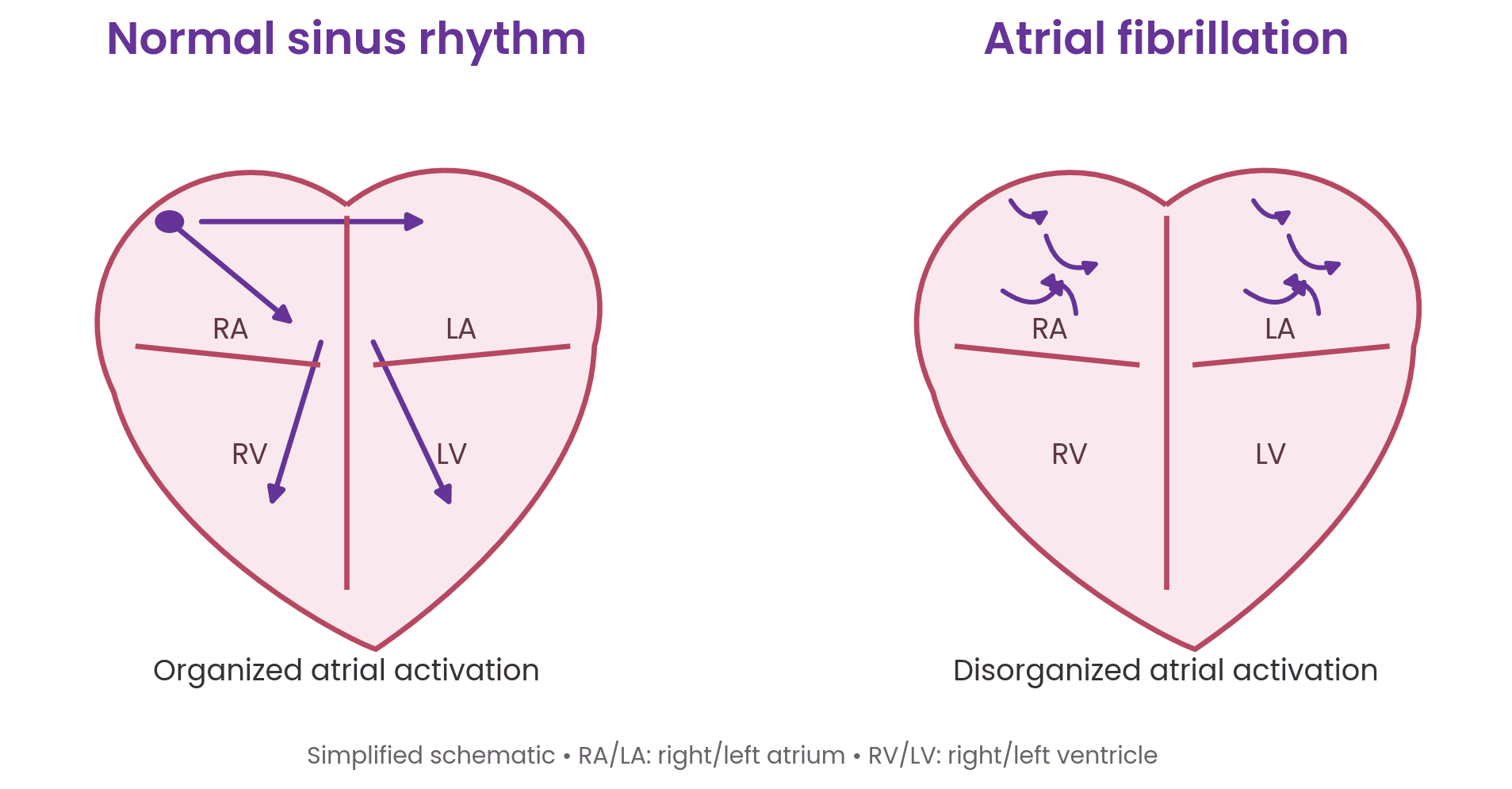
AF is a common arrhythmia that increases stroke risk and can affect cardiac function and quality of life. In AF, disorganized atrial electrical activity impairs coordinated contraction, allowing blood to pool and form clots that can travel to the brain. A rapid ventricular response can impair cardiac function. Hypertension, obesity, sleep apnea, and other conditions can promote atrial remodeling and AF progression.
AF may cause palpitations, fatigue, or declining exercise tolerance—or first emerge during a stroke or heart failure (HF) admission. More than 10.5 million U.S. adults have AF; symptoms alone do not indicate risk.
AF management connects daily function with prevention of future harm:
- Assess stroke risk independently of symptoms
- Discuss rhythm control early when appropriate
- Address conditions driving AF
The plan should reflect the patient’s goals and what they can sustain.
Resources & References
Clinical tools and patient education
VLN Procedure Playbook — a guide for patients preparing for a procedure
Guidelines and supporting sources
There’s a place for
your voice here.
Patients and caregivers bring their questions and lived experiences. You bring a perspective that can make a difference. Meet the people behind the questions—and the peers who share your work.