
For healthcare professionals
Hypertension
Hypertension
Diagnosis
Measure BP Accurately
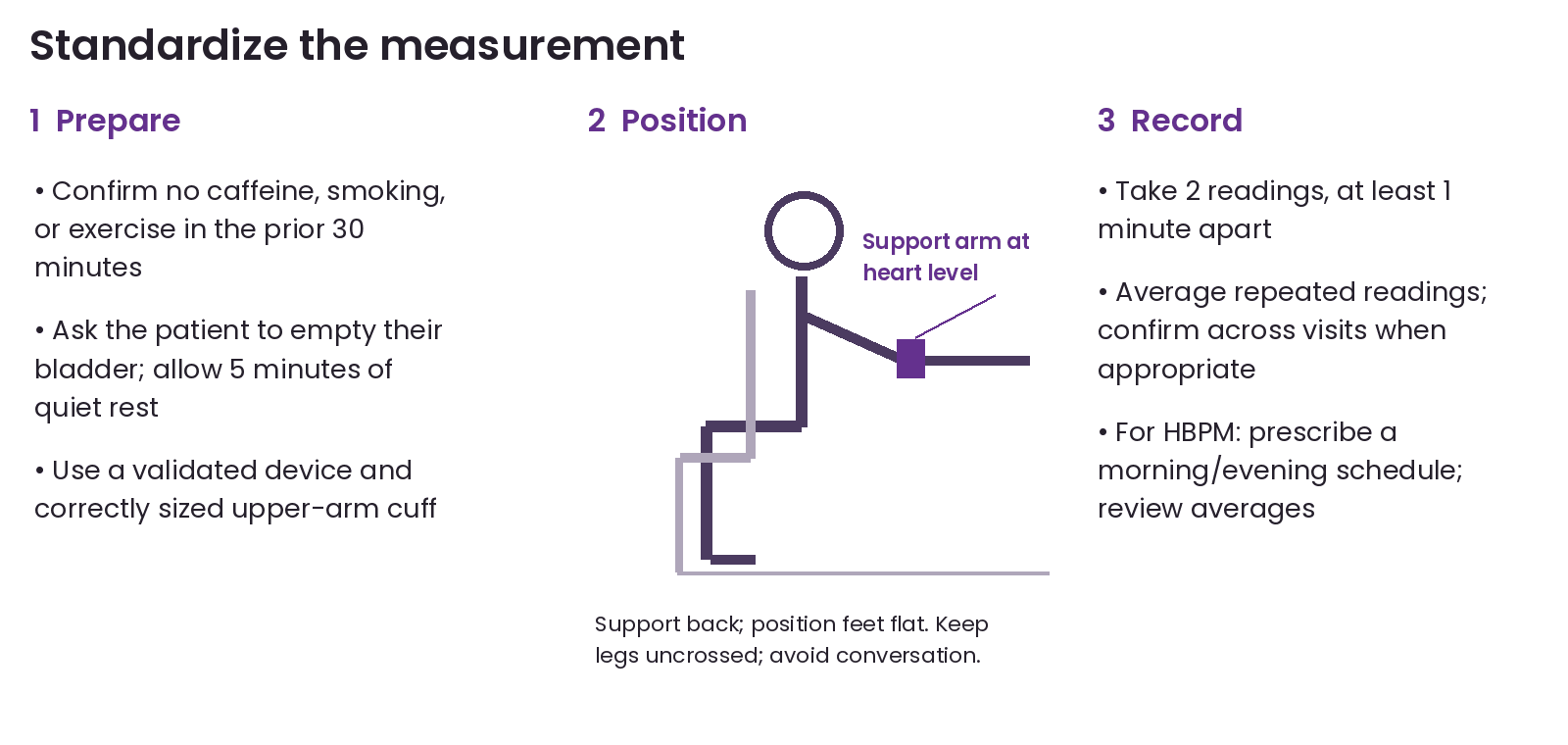
Home monitoring
Use the American Heart Association (AHA) Home Blood Pressure Monitoring instructions to teach patients proper technique. Cuffless wearables should not determine diagnosis or medication titration.
- Use HBPM or ABPM to confirm sustained elevation and identify white-coat or masked patterns; ABPM also evaluates nighttime BP.
- Discordant readings: Recheck cuff fit, technique, timing, and recording adequacy. Measure orthostatic BP when symptoms or clinical risk warrant it.
Assess risk and secondary causes
- Baseline evaluation: Review cardiovascular disease (CVD), stroke, diabetes, CKD, pregnancy potential, and all medications. Obtain renal function, electrolytes, metabolic testing, urinalysis, urine albumin-to-creatinine ratio (UACR), and electrocardiogram (ECG).
- Predicting Risk of Cardiovascular Disease Events (PREVENT): For eligible adults without established CVD, use the PREVENT calculator’s 10-year total CVD estimate for stage 1 treatment decisions. Note that PREVENT atherosclerotic cardiovascular disease (PREVENT-ASCVD) is the estimate used for lipid decisions.
- Secondary causes: Evaluate clinical clues to primary aldosteronism, obstructive sleep apnea (OSA), renal disease, and other endocrine causes. Review use of nonsteroidal anti-inflammatory drugs (NSAIDs), stimulants, decongestants, glucocorticoids, and hormonal agents.
- Primary aldosteronism: Screen resistant HTN even without hypokalemia. Interpret aldosterone, renin, and the adosterone-to-renin ratio (ARR) in the context of potassium and interfering medications.Treatment
Resources & References
Clinical tools used on this page
Guidelines and supporting sources
Real people. Shared perspectives.There’s a place for
There’s a place for
your voice here.
Patients and caregivers bring their questions and lived experiences. You bring a perspective that can make a difference. Meet the people behind the questions—and the peers who share your work.