Stroke and Transient Ischemic Attack (TIA)
Stroke and Transient Ischemic Attack (TIA)
Prevention
Connect prevention with the patient’s goals
A prevention plan is more likely to last when it helps the patient live the life they want. After stroke, fatigue, aphasia, depression, mobility limits, or caregiver strain may make a standard medication or lifestyle plan difficult. Agree on achievable priorities and use the existing primary care, pharmacy, rehabilitation, and community team to carry them forward.
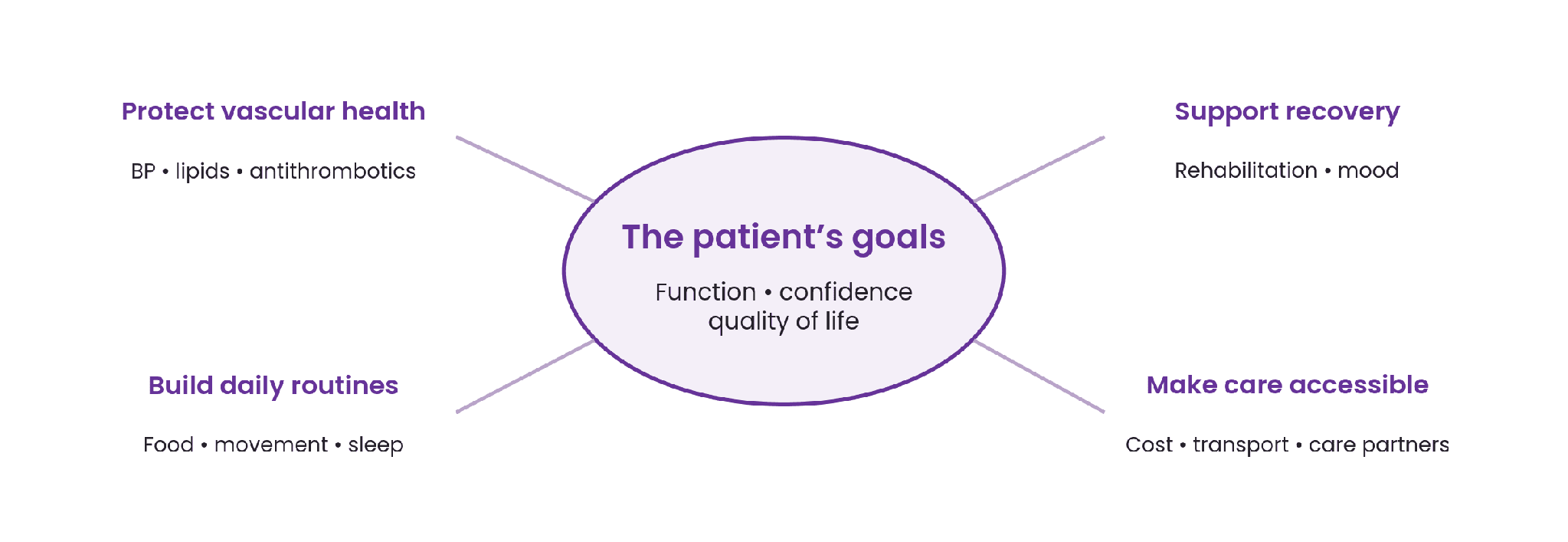
- Before a first event: The 2024 AHA/ASA Primary Stroke Prevention Guideline integrates vascular health with social conditions and life-stage risks. Address hypertension, diabetes, lipids, tobacco, activity, diet, and AF within routine care. The AHA PREVENT calculator can support ASCVD risk discussions in eligible adults without known ASCVD; aspirin is not routine primary stroke prevention.
- After ischemic stroke or TIA: For most patients with hypertension, a long-term BP goal <130/80 mm Hg is appropriate, individualized to tolerance. Use maximally tolerated lipid therapy for atherosclerotic disease; the 2026 ACC/AHA Dyslipidemia Guideline sets LDL-C <55 mg/dL for very-high-risk ASCVD. Individualize diabetes treatment and make medication access part of the plan.
- Make daily changes feasible: Adapt Mediterranean-style eating, smoking cessation support, reduced alcohol exposure, and movement to budget, swallowing safety, mobility, and fatigue. Connect activity goals with rehabilitation rather than adding a separate exercise burden.
Recovery and follow-up
The 2026 AHA/ASA Rehabilitation and Recovery Guideline supports coordinated therapy, reassessment, mental-health care, and care-partner training. Assign responsibility for pending workup, refills, DAPT stop dates, anticoagulant safety, and rehabilitation access. Use ASA Life After Stroke resources and ASA B.E. F.A.S.T. resources to support recovery and an emergency action plan.
Resources & References
Clinical tools and patient education
Guidelines and supporting sources
There’s a place for
your voice here.
Patients and caregivers bring their questions and lived experiences. You bring a perspective that can make a difference. Meet the people behind the questions—and the peers who share your work.