
Venous Thromboembolism (VTE)
Venous Thromboembolism (VTE)
Clinical Overview
A swollen leg or sudden breathlessness may be the first sign of a clot, and the start of months of uncertainty for the patient. VTE care connects urgent diagnosis with a longer conversation about recurrence, bleeding, and returning to everyday life.
VTE includes deep vein thrombosis (DVT) and pulmonary embolism (PE). DVT usually develops in the legs or pelvis, but can involve the arms. A clot that travels to the pulmonary arteries can impair oxygenation and strain the right heart; PE may occur without recognizable leg symptoms.
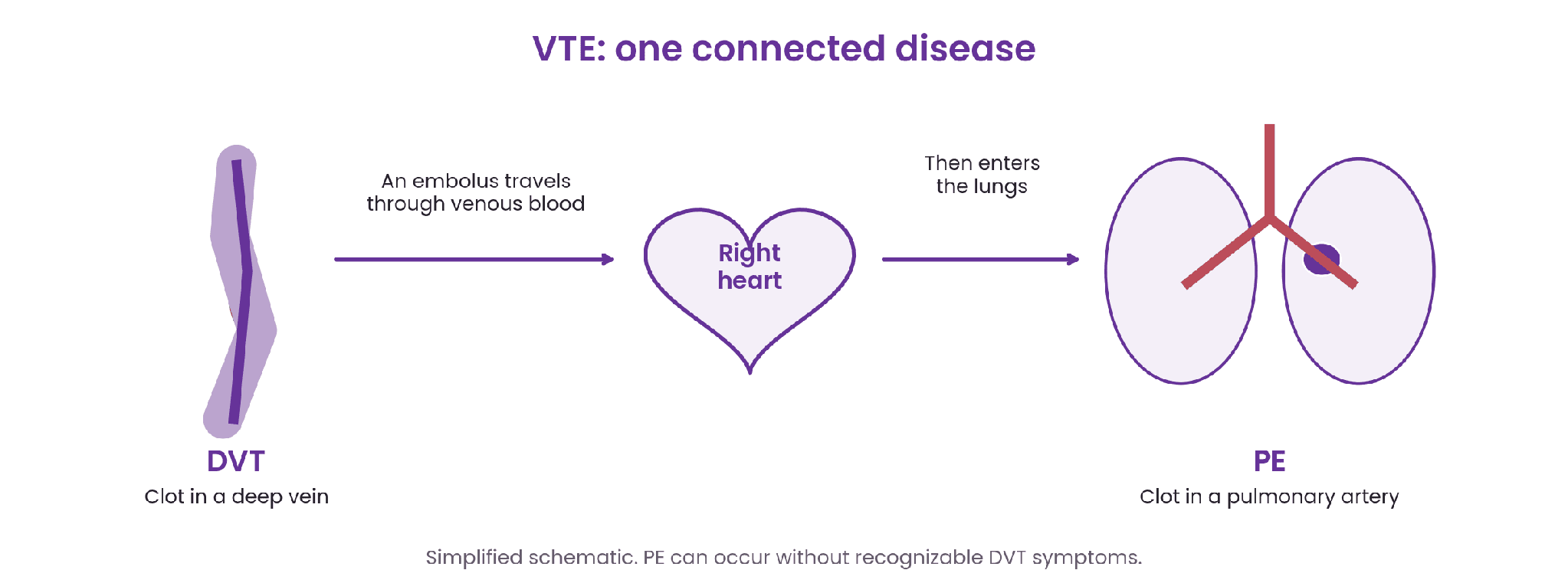
- Confirm the diagnosis: Symptoms alone cannot establish or exclude VTE. Combine clinical probability with appropriate testing.
- Treat the immediate risk: Anticoagulation prevents extension and recurrence while the body clears the clot. Hemodynamic instability or a threatened limb changes the urgency and treatment pathway.
- Look beyond the clot: The trigger, bleeding risk, medication access, and patient priorities shape treatment duration and recovery.
Resources & References
Clinical tools and patient education
Guidelines and supporting sources
There’s a place for
your voice here.
Patients and caregivers bring their questions and lived experiences. You bring a perspective that can make a difference. Meet the people behind the questions—and the peers who share your work.