
For healthcare professionals
Venous Thromboembolism (VTE)
Venous Thromboembolism (VTE)
Prevention
On this page
Build protection into the care already happening
Prevention works best when the plan fits the patient’s life. Use hospital pathways, pharmacy support, primary care, and the existing specialty team to connect prophylaxis, medication access, and recovery—rather than adding another disconnected checklist. Use the VLN VTE Clinician Communication Tool to guide conversations from diagnosis through treatment and follow-up.
- Prevent a first event: The ASH Medical VTE Prevention Guideline supports risk- and bleeding-based prophylaxis for hospitalized medical patients. Surgical and cancer settings need their own pathways; do not extend hospital prophylaxis or prescribe outpatient prophylaxis automatically.
- Anticipate changes: Hospitalization, surgery, reduced mobility, hormones, pregnancy, and cancer treatment can change risk. Revisit prevention during these transitions. Long-distance travel advice should reflect personal risk; routine anticoagulation is not needed for every traveler.
- Make treatment manageable: At existing visits, ask about missed doses, cost, bruising, heavy menstrual bleeding, falls, and new medications. A pharmacist or anticoagulation service can resolve practical barriers; patients should not have to ration or stop treatment on their own.
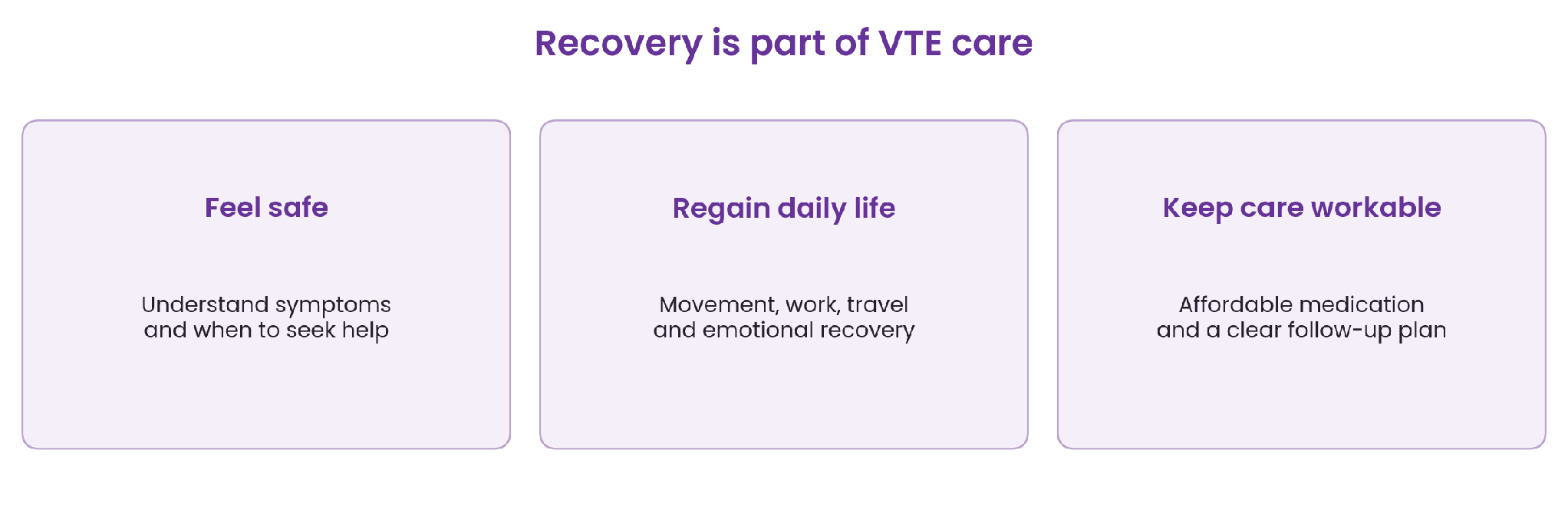
Follow recovery, not just the prescription
- After DVT: Persistent swelling, heaviness, pain, or skin changes may reflect post-thrombotic syndrome. Encourage appropriate activity; compression can help selected patients’ symptoms but is not routinely prescribed solely to prevent the syndrome.
- After PE: Ask about breathlessness, exercise tolerance, and function at follow-up visits for at least a year. Persistent symptoms after approximately 3 months warrant assessment for other causes and chronic thromboembolic pulmonary disease or pulmonary hypertension, with referral when indicated.
- Restore confidence: Discuss work, travel, intimacy, movement, and fear of another clot. Link VLN patient resources to the follow-up plan. Give clear instructions for urgent assessment of new breathlessness, chest pain, syncope, new unilateral swelling, or significant bleeding.
Resources & References
Clinical tools and patient education
Guidelines and supporting sources
Real people. Shared perspectives.There’s a place for
There’s a place for
your voice here.
Patients and caregivers bring their questions and lived experiences. You bring a perspective that can make a difference. Meet the people behind the questions—and the peers who share your work.