
Hypertension
Hypertension
Clinical Overview
Hypertension (HTN) affects nearly half of U.S. adults, though less than 25% have well-controlled blood pressure (BP). Risk reflects cumulative BP exposure and extends beyond stroke and coronary disease to heart failure (HF), chronic kidney disease (CKD), and cognitive impairment. Assessment should establish the BP phenotype, cardiovascular risk, and organ injury, not rely on symptoms.
- Confirm the phenotype: White-coat and masked hypertension can change treatment decisions; use out-of-office readings to clarify the pattern.
- Look for secondary disease: Abrupt onset or worsening, resistant HTN, hypokalemia, or disproportionate organ injury warrant targeted evaluation.
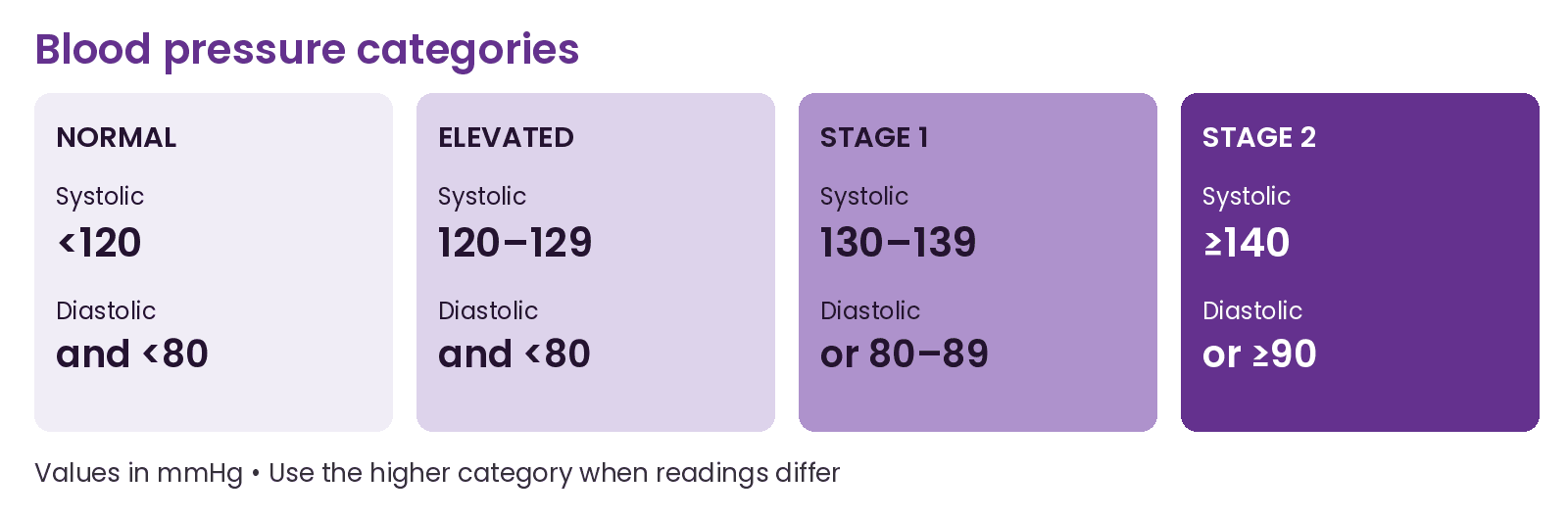
Use the higher category when systolic blood pressure (SBP) and diastolic blood pressure (DBP) differ. These are U.S. office categories; home blood pressure monitoring (HBPM) and ambulatory blood pressure monitoring (ABPM) require method-specific thresholds.
Resources & References
Clinical tools used on this page
Guidelines and supporting sources
There’s a place for
your voice here.
Patients and caregivers bring their questions and lived experiences. You bring a perspective that can make a difference. Meet the people behind the questions—and the peers who share your work.